
Introduction
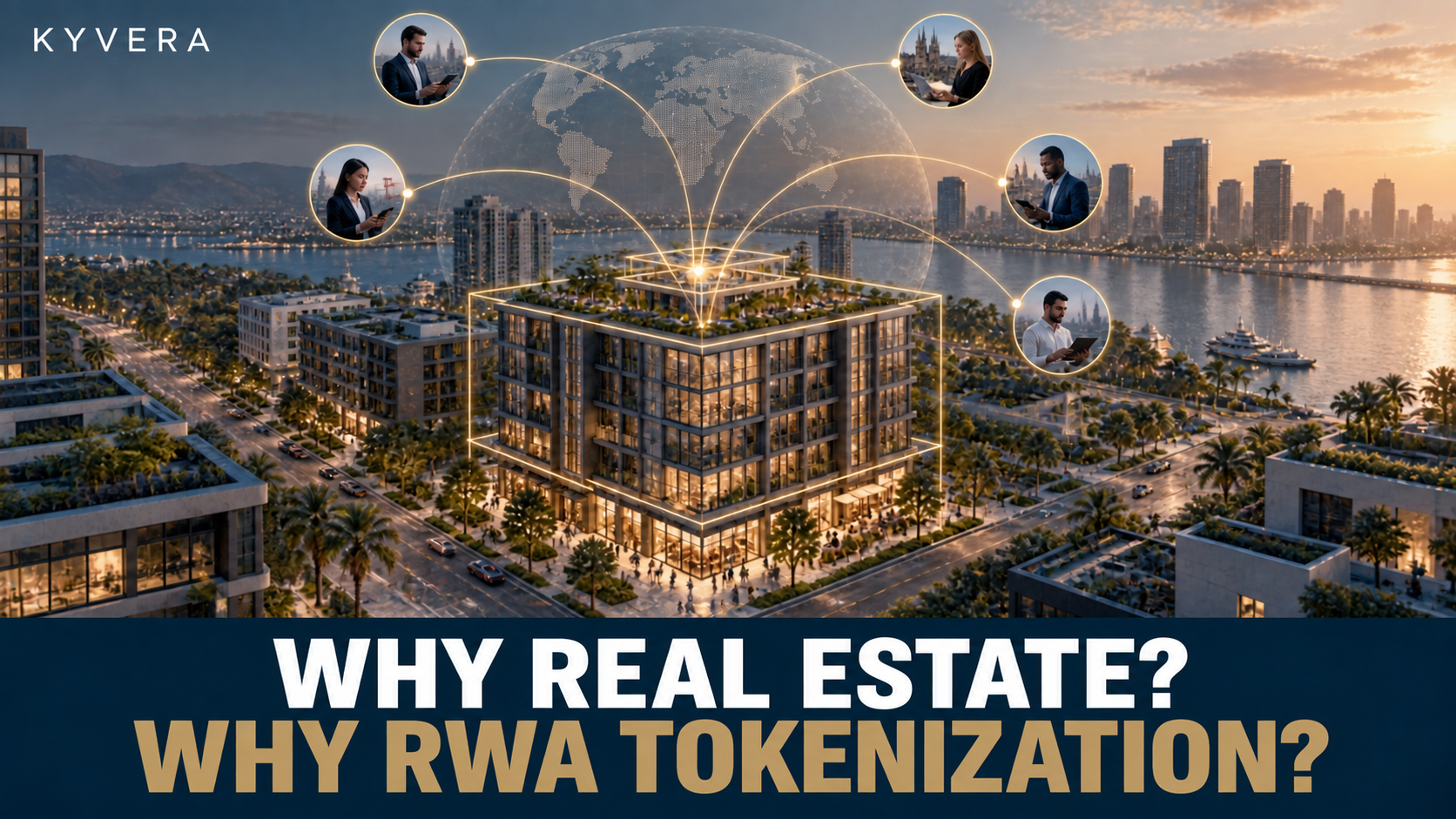
Real estate is one of the world’s largest asset classes, yet participation often requires significant capital, lengthy transactions, and complex administration. Real-world asset tokenization offers a new way to digitally represent ownership or economic rights connected to property. Depending on the structure, tokens may represent fractional ownership, income participation, debt exposure, or interests in property-backed vehicles. Kyvera helps institutions evaluate these opportunities by coordinating asset strategy, commercial structuring, governance, technology, compliance, and investor-access planning.

Why Real Estate Is Well Suited to Tokenization
A Large and Tangible Asset Class
Real estate is supported by tangible assets with measurable characteristics, including location, valuation, rental income, operating history, and development potential. This makes property easier to assess than many purely digital opportunities. Tokenization can divide ownership or economic interests into smaller units, potentially reducing capital barriers for qualified investors. It may also connect property opportunities with broader investor networks. However, Kyvera evaluates ownership records, financial performance, investor suitability, commercial objectives, legal structures, and regulatory requirements before recommending a responsible tokenization pathway.
The Value Tokenization Can Unlock
Access, Transparency and Efficiency
Tokenization may improve how real estate interests are structured, administered, recorded, and transferred. Blockchain infrastructure can provide traceable ownership records, while smart contracts may automate selected processes such as investor verification, distributions, transfer controls, and reporting. Fractional structures may also widen participation where legally permitted. However, tokenization does not guarantee liquidity or investor demand. Kyvera ensures that digital capabilities remain connected to enforceable rights, credible property information, effective governance, and a commercially viable investment proposition.
Real Estate Tokenization: Market Statistics
Global real estate represents an enormous pool of value, while tokenized property remains at an early stage of development. Industry forecasts suggest significant growth, but projections should not be treated as guaranteed outcomes. For individual projects, asset quality, governance, commercial viability, regulation, and investor demand remain more important than headline market estimates. The following figures provide useful context for understanding the potential scale of real estate tokenization.
| Market Indicator | Reported Figure |
| Total global real estate value in 2022 | US$379.7 trillion |
| Commercial real estate value in 2022 | US$50.8 trillion |
| Estimated tokenized real estate market in 2024 | Below US$0.3 trillion |
| Forecast tokenized real estate market by 2035 | US$4 trillion |
| Forecast compound annual growth rate | 27% |
Challenges Beyond Technology

Rights, Regulation and Governance
A digital token has meaningful value only when its underlying rights are clearly documented and legally enforceable. Investors must understand what they own, how income will be distributed, who controls the property, and what happens during a sale, default, or dispute. Projects may also involve securities regulations, taxation, custody, investor verification, valuation, reporting, and cross-border restrictions. Kyvera begins with asset readiness and strategic structuring because technology cannot correct unclear ownership, incomplete documentation, weak economics, or unsuitable governance.
Conclusion
Real estate is emerging as a major RWA tokenization opportunity because of its substantial value, tangible nature, income potential, and suitability for fractional participation. Tokenization may improve investor access, transparency, administration, and transfer efficiency. However, technology alone cannot create a credible property opportunity. Clear ownership, enforceable rights, commercial viability, regulation, governance, valuation, and investor confidence must work together. Through the Kyvera Orchestration Layer, Kyvera coordinates these elements and helps institutions develop responsible pathways from real estate assets to structured digital opportunities.
Frequently Asked Questions
What is real estate tokenization?
Real estate tokenization is the digital representation of ownership or economic rights connected to property. Tokens may represent fractional ownership, rental income, debt exposure, or participation in a property-backed investment structure.
Does tokenization guarantee liquidity?
No. Liquidity depends on investor demand, transfer permissions, regulatory requirements, market infrastructure, asset quality, and access to compliant secondary-market venues.
Can every property be tokenized?
No. A property requires clear ownership, reliable valuation, complete documentation, commercial potential, defined investor rights, and a legally workable structure.
What role does Kyvera perform?
Kyvera evaluates asset readiness and coordinates commercial structuring, technology, compliance, governance, and investor-access partners through its Orchestration Layer.
When should property owners approach Kyvera?
Property owners should ideally engage Kyvera before selecting a platform. Early assessment helps identify structural gaps and ensures that technology supports the asset’s commercial strategy.