
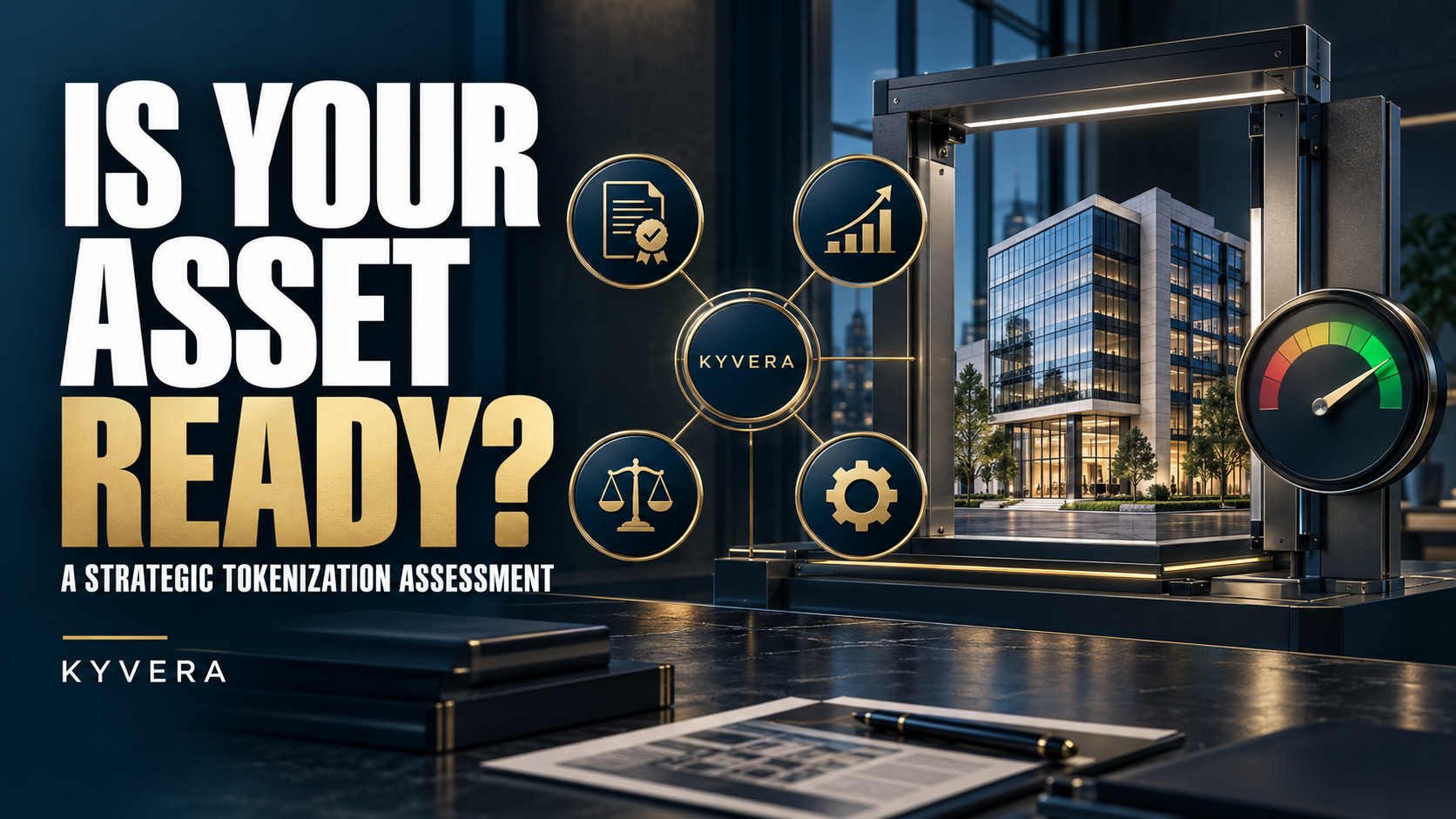
Introduction:
Readiness Before Technology
A valuable asset is not automatically ready for tokenization. Real estate, infrastructure projects, and agricultural assets require more than digital technology. They need clear ownership, understandable economics, defined rights, and a workable operational structure.
Asset tokenization begins with strategic assessment before technology selection.
Before choosing a platform, asset owners must understand what a token represents, how ownership rights are structured, and whether the opportunity is suitable for investors.
Kyvera helps institutions answer these critical questions by evaluating asset readiness, identifying potential challenges, and creating a structured pathway toward responsible tokenization.

What Asset Tokenization Requires
Real-world asset tokenization involves representing defined ownership rights or economic interests through digital structures.
A successful tokenization model requires alignment between:
- Underlying asset
- Ownership rights
- Legal framework
- Governance structure
- Investor requirements
- Operational processes
For example, tokenizing a commercial building does not resolve unclear ownership, unresolved claims, or uncertainty around income distribution.
These factors must be addressed before digital transformation begins.
A credible tokenized asset starts with a credible underlying structure.
Kyvera focuses on ensuring that strategic foundations are established before technology implementation.
The Strategic Assessment Framework
1. Asset Quality and Ownership
The first step is understanding the asset itself.
Kyvera evaluates:
- Ownership documentation
- Asset condition
- Valuation support
- Existing claims
- Contractual restrictions
Clear ownership provides the foundation for building a reliable tokenization structure.
If gaps exist, Kyvera helps identify areas requiring resolution before moving toward execution.
2. Commercial Purpose and Market Fit
Tokenization should support a clear business objective.
Kyvera helps evaluate:
- Purpose of tokenization
- Target investor groups
- Expected cash flows
- Holding period
- Market demand
Every asset requires a different approach. A commercial property, infrastructure project, or agricultural opportunity may require different investment models and participation structures.
Kyvera assesses whether the opportunity creates practical value before selecting any technology solution.
3. Legal, Regulatory, and Governance Readiness
A token must represent clearly defined rights and responsibilities.
Important considerations include:
- Ownership rights
- Investor participation
- Transfer processes
- Governance structure
- Regulatory requirements
Kyvera coordinates with appropriate legal and compliance experts to support structured frameworks.
By addressing governance early, Kyvera helps create stronger foundations for investor confidence and long-term sustainability.
4. Operational and Technology Readiness
Tokenization requires more than digital representation. The underlying asset still needs effective management.
Kyvera evaluates operational readiness, including:
- Record management
- Reporting processes
- Asset administration
- Investor communication
- Ongoing management
Technology should support the defined structure and business objectives.
Technology enables the structure; it cannot substitute for one.
Kyvera works with suitable technology partners to identify solutions aligned with asset requirements.
Measuring Readiness
A readiness assessment helps identify strengths, challenges, and improvement areas before tokenization begins.
| Assessment Area | Metric To Examine | Readiness Question |
| Ownership | Verified asset documents | Can ownership and claims be established clearly? |
| Valuation | Latest asset assessment | Is the asset value supported by evidence? |
| Commercial Case | Expected returns and costs | Is the opportunity economically practical? |
| Governance | Defined responsibilities | Are rights and processes clearly structured? |
| Operations | Documented management processes | Can the structure operate effectively after launch? |
An asset does not require perfection from day one. The purpose of assessment is to identify gaps, assign responsibilities, and determine whether to proceed, restructure, or improve readiness.
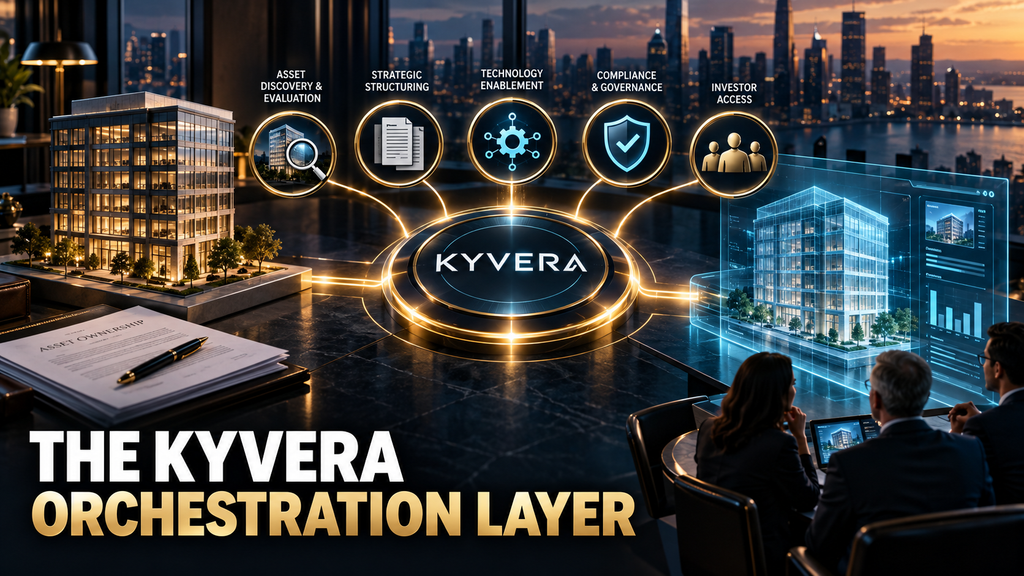
The Kyvera Orchestration Layer
Tokenization requires coordination between multiple elements, including asset owners, advisory partners, technology providers, compliance experts, and investor networks.
The Kyvera Orchestration Layer connects these critical components through a structured approach:
- Asset Discovery & Evaluation
- Strategic Structuring
- Technology Enablement
- Compliance & Governance Coordination
- Investor Access Planning
Kyvera ensures that each stage builds upon the previous one, allowing institutions to move toward tokenization with greater clarity and strategic direction.
Through the Kyvera Orchestration Layer, organizations can transform real-world assets into structured digital opportunities while maintaining focus on compliance, value creation, and responsible execution.
Conclusion
The key question is not only whether an asset can be digitally represented, but whether it is strategically ready for that transformation.
Successful tokenization requires clear ownership, structured rights, commercial viability, governance, suitable technology, and investor confidence.
Through the Kyvera Orchestration Layer, Kyvera helps institutions evaluate readiness, coordinate critical stakeholders, and build structured pathways from real-world assets to digital opportunities.
Frequently Asked Questions
Can any asset be tokenized?
Not necessarily. An asset requires clear ownership, commercial purpose, defined rights, and a structure that meets applicable requirements.
Does a high asset valuation mean it is ready for tokenization?
No. Valuation is only one factor. Legal rights, governance, market demand, operational capability, and investor suitability are also important.
When should asset owners approach Kyvera?
Ideally, before selecting a technology platform or presenting an investment opportunity. Kyvera helps evaluate readiness and identify necessary steps.
What role does Kyvera play in asset tokenization? Kyvera provides strategic coordination through its Orchestration Layer, connecting asset assessment, structuring, technology solutions, compliance alignment, and investor access.