
Introduction
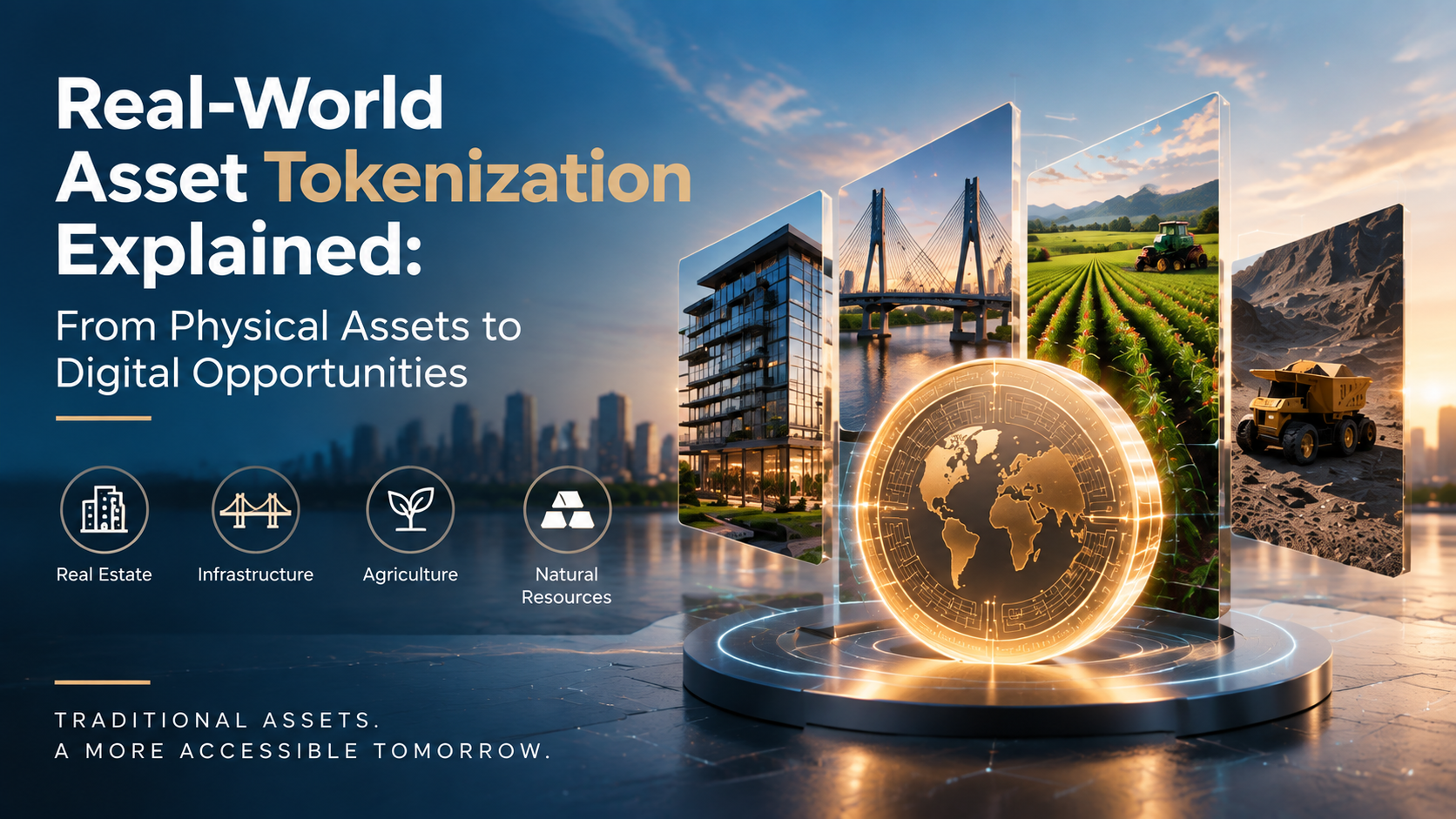
Real-World Asset Tokenization connects physical assets with digital opportunities by creating structured ownership models through technology, strategy, and compliant frameworks.
What Is RWA Tokenization?
Understanding Digital Representation of Physical Assets
Real-World Asset Tokenization represents ownership rights or economic value connected to physical assets through digital tokens.
A token does not create value independently. Its value depends on the underlying asset, legal structure, ownership rights, and governance framework.
The process can be represented as:
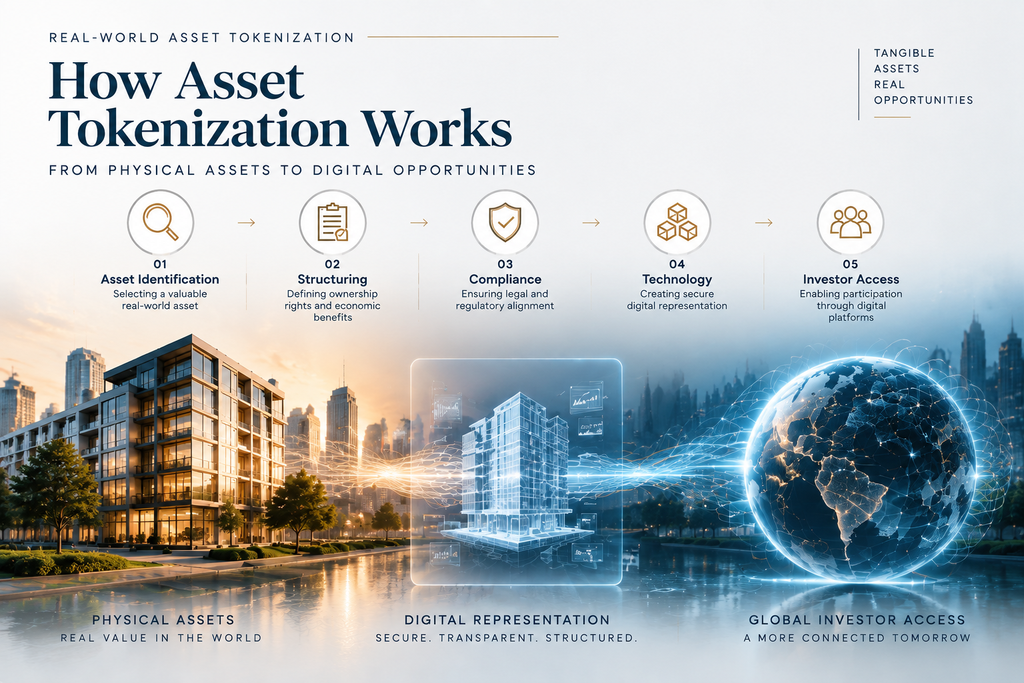
Physical Asset → Defined Rights → Digital Representation → Investor Access
Common asset categories include:
- Real Estate
- Infrastructure
- Agriculture
- Natural Resources
- Corporate Assets
- Data Infrastructure
How Asset Tokenization Works
From Asset Evaluation to Digital Opportunity
Tokenization begins with understanding the asset, including ownership structure, documentation, market potential, and suitability.
The process involves:
- Asset evaluation
- Strategic structuring
- Legal and compliance consideration
- Technology implementation
- Investor accessibility
Technology supports the structure through blockchain infrastructure, digital asset platforms, and smart contract solutions.
Examples of Real-World Asset Tokenization
Exploring Opportunities Across Asset Classes
Real Estate
Commercial buildings, developments, and income-generating properties can potentially be structured into digital investment opportunities.
Infrastructure
Large-scale projects can explore structured participation models depending on financing requirements, regulations, and governance frameworks.
Agriculture and Natural Resources
These assets require strong verification, operational clarity, and defined economic rights before digital transformation.
Benefits of Asset Tokenization
Creating More Accessible and Transparent Asset Models
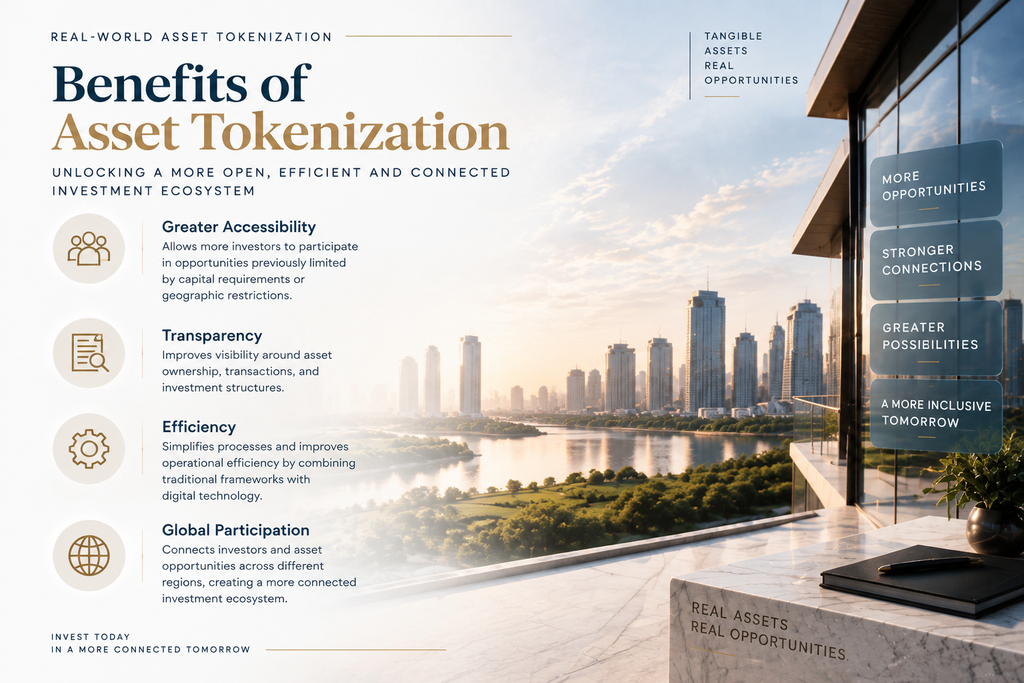
Greater Accessibility
Tokenization can create opportunities for broader participation in valuable assets.
Improved Transparency
Digital systems can improve visibility into ownership records and transactions.
Operational Efficiency
Technology can support better record management and streamlined processes.
Challenges in RWA Tokenization
Building Trust Through Structure and Compliance
Regulatory Requirements
Different jurisdictions require appropriate legal and compliance alignment.
Governance
Clear responsibilities and management structures are essential.
Technology Security
Digital infrastructure must provide reliability and protection.
Market Potential and Future Outlook
The future of asset ownership is moving toward stronger integration between physical assets and digital ecosystems.
Successful models will depend on:
- Clear asset rights
- Strong governance
- Suitable technology
- Regulatory alignment
- Professional execution
Kyvera’s Strategic Role
The Kyvera Orchestration Layer
Kyvera acts as a strategic coordination layer for compliant RWA tokenization by connecting every critical element required for asset transformation.
01 | Asset Discovery & Evaluation
Kyvera evaluates:
- Asset type
- Ownership structure
- Market potential
- Tokenization suitability
Outcome: Understanding whether and how an asset can be transformed.
02 | Strategic Structuring
Kyvera coordinates:
- Financial structures
- Ownership models
- Investment frameworks
- Market positioning
Outcome: A structured pathway aligned with asset objectives.
03 | Ecosystem & Technology Coordination
Kyvera connects:
- Technology providers
- Blockchain infrastructure
- Digital asset platforms
- Smart contract solutions
Outcome: Suitable technology ecosystem.
04 | Regulatory & Governance Alignment
Kyvera supports:
- Legal frameworks
- Compliance requirements
- Governance structures
- Risk management
Outcome: Institution-ready structure.
05 | Investor & Market Access
Kyvera connects:
- Qualified investors
- Institutional participants
- Strategic networks
Outcome: Digitally accessible investment opportunity.
Conclusion
Real-World Asset Tokenization represents a new evolution in connecting physical assets with digital ecosystems. Through its Orchestration Layer, Kyvera helps create structured, compliant, and accessible digital opportunities.
FAQs
Is RWA tokenization the same as cryptocurrency?
No. RWA tokenization represents defined rights connected to real-world assets, while cryptocurrencies operate differently.
Can every asset be tokenized?
No. Suitability depends on ownership clarity, commercial potential, legal requirements, and investment structure.
Does tokenization guarantee liquidity?
No. Liquidity depends on market conditions, regulations, and available participants.
What role does Kyvera play in tokenization?
Kyvera coordinates asset evaluation, strategic structuring, technology ecosystem, compliance alignment, and investor access through its Orchestration Layer.
Why is strategy important before technology?
Because technology supports the asset strategy. Proper evaluation and structuring must come first.