

Introduction:
Opportunity Begins With the Asset
A building, infrastructure project, or agricultural holding may have substantial value without being ready for a digital investment structure. Turning a physical asset into a digital opportunity takes more than issuing a token. Someone must establish what the asset is worth, who owns it, which rights can be offered, and how those rights will be managed.
That journey begins with strategy. Kyvera helps asset owners and institutions examine each decision in sequence, bringing the relevant expertise together before technology is selected.
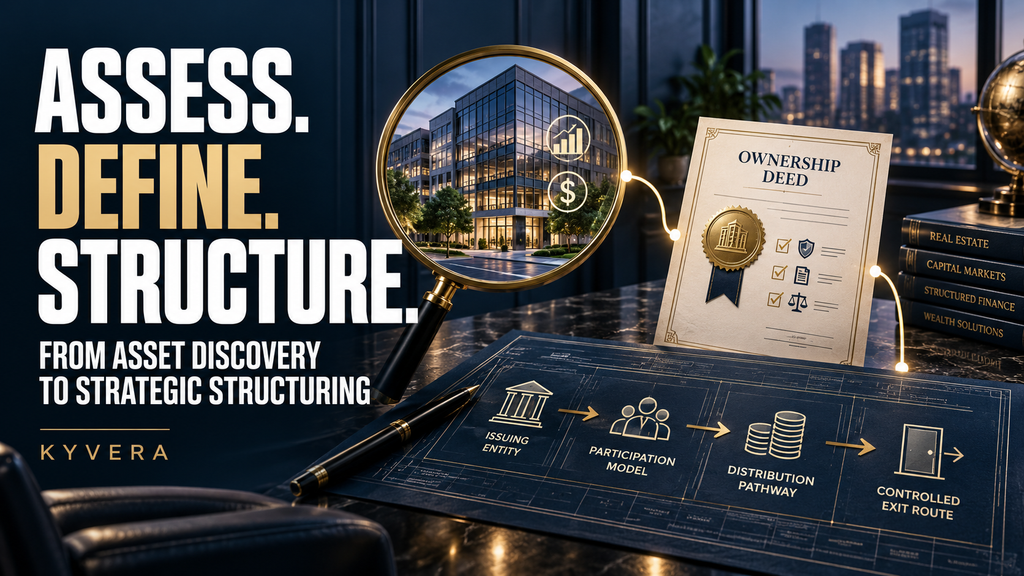
Asset Discovery and Evaluation
Is the asset suitable?
The first step is to understand the asset itself: its condition, income potential, operating history, market demand, and valuation basis. A property with predictable rental income, for example, presents different opportunities and risks from land awaiting development.
Kyvera considers whether a digital structure would serve a clear commercial purpose. If it cannot improve access, administration, transparency, or another defined objective, tokenization may not be the right next step.
Ownership and Rights
What would a token represent?
A digital token does not automatically transfer ownership of a physical asset. Its meaning depends on the legal documents and structure behind it. It might represent an interest in an entity, a claim to defined income, or another specified right.
Clear title, documented obligations, and a precise description of investor rights are therefore essential. Kyvera works from the underlying asset and its rights outward, so the digital representation has a foundation people can understand and assess.
Strategic Structuring
Designing the opportunity
Once the asset and rights are understood, the institution can consider how participation should work. Key decisions include the issuing entity, eligibility criteria, distribution arrangements, transfer restrictions, fees, and exit options.
There is no universal structure for every real-world asset. Kyvera’s strategic approach connects the proposed model to the asset’s economics and the institution’s objectives, while identifying questions that require specialist legal and financial advice.

Compliance and Governance
Building confidence into the process
A credible opportunity needs clear oversight. This includes decisions about disclosures, investor checks, reporting, custody, recordkeeping, and who is responsible when circumstances change. Applicable requirements depend on the jurisdiction, asset, and proposed offering.
Governance also continues after launch. Investors need to know how information will be shared, how distributions will be handled, and who can make decisions on their behalf. Kyvera treats these responsibilities as part of the design, rather than details to resolve after issuance.
Technology Enablement
Choosing tools for the structure
Only after the commercial and governance model is defined should the team select the technology. Platform capabilities, security, integration, access controls, and ongoing support must fit the rights being offered.
Kyvera is platform agnostic: the objective is to coordinate technology that serves the structure. A token can help record and administer participation, but software cannot resolve unclear ownership or create investor protections on its own.
Investor Access
From issuance to an understandable proposition
A digital opportunity must be explained as carefully as it is built. Potential participants need accessible information about the asset, their rights, expected processes, material risks, and how they may receive updates.
Investor access does not mean an asset will become liquid or that demand is guaranteed. Kyvera helps institutions prepare a coherent path from asset assessment to a proposition that eligible investors can evaluate.
Market Outlook
Published forecasts illustrate growing interest, but their scope and assumptions differ. They are projections, not measured market size or guaranteed outcomes.
| Source | 2030 projection | Scope |
| McKinsey | About $2 trillion | Tokenized financial assets; excludes cryptocurrencies and stablecoins |
| BCG and ADDX | $16.1 trillion | Broader illiquid-asset tokenization opportunity |
These figures should not be compared as equivalent forecasts. For an individual asset owner, readiness and execution matter more than a headline market estimate.
The Kyvera Orchestration Layer
The journey draws on asset specialists, legal and compliance advisers, technology providers, and investor-facing teams. The Kyvera Orchestration Layer connects these moving parts across five stages: asset assessment, strategic structuring, technology enablement, compliance and governance, and investor access.
Kyvera’s role is to help institutions keep the decisions aligned. That coordination turns a promising concept into a structured plan with clear responsibilities and a practical route to execution.
Frequently Asked Questions
Can any physical asset be tokenized?
Not every asset is suitable. Ownership clarity, reliable information, economic viability, and a workable legal structure must be assessed first.
Does tokenization guarantee liquidity?
No. The ability to transfer a token depends on its terms, applicable rules, available venues, and actual buyer demand.
When should an institution involve Kyvera?
Ideally, at the assessment stage. Kyvera can help define the opportunity and identify structural issues before resources are committed to a platform.
Conclusion
The complete journey from physical asset to digital opportunity begins with a sound asset and clearly defined rights. It moves through commercial structuring, governance, appropriate technology, and responsible investor access. Kyvera brings those disciplines together through its Orchestration Layer, helping institutions explore tokenization with a clear strategy and an understanding of what must work beyond the token itself.